Health and Safety Policy — Flat Clearance Surbiton
 This Health and Safety policy sets out the core safety expectations and operating principles for Flat Clearance Surbiton when providing flat clearance, rubbish removal and waste clearance services across our rubbish company service area. The document outlines responsibilities, risk assessment practices, controls for handling general household waste and bulky items, and measures to protect staff, clients and the public. It is intended as a formal policy statement that supports compliance with applicable general safety standards for waste and clearance operations rather than exhaustive local legal interpretation.
This policy applies to all personnel, contractors and operatives engaged in our flat clearance and rubbish removal service. Responsibilities include making sure that all team members receive appropriate induction, ongoing training and supervision; that personal protective equipment is available and used; and that daily operational checks and vehicle safety routines are completed prior to any job. The organisation commits to continual improvement in safety performance and to maintaining records of training, risk assessments and incident reports.
 Risk assessments are central to safe rubbish clearance and waste removal operations. Before each job a site-specific evaluation will be carried out to identify hazards such as lifting risks, trip hazards, sharps, hazardous materials, asbestos suspicion, pest infestation and confined spaces. Where hazards are identified, control measures will be implemented: elimination, substitution, engineering controls, administrative controls and personal protective equipment (PPE). Operatives are instructed to suspend work and seek guidance if unexpected hazards are found.
Operational Controls and Safe Systems of Work
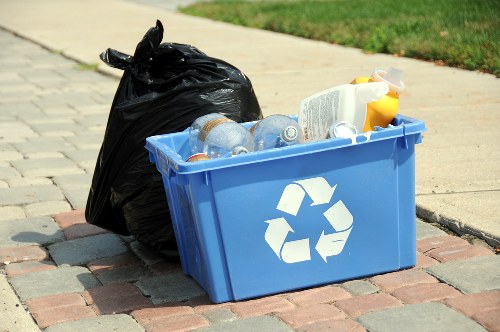
We maintain clear procedures for safe manual handling and rubbish collection. These include using correct lifting techniques, two-person lifts for bulky items, mechanical aids (trolleys, sack trucks) and vehicle tail-lifts. Prior to loading, items will be checked for stability and weight, and hazardous items separated and handled according to specialist procedures. Waste segregation is promoted to reduce environmental and health risks and to facilitate recycling wherever possible.
Vehicle safety is critical for any rubbish company service area activity. Drivers must ensure vehicles are roadworthy, loads are properly secured, and legal load limits are observed. Daily vehicle checks, secure loading practices, and sensible route planning reduce the risk of accidents. All drivers must hold appropriate licences and are required to follow manual handling rules when operating lifts and unloading at facilities.
PPE and hygiene expectations are clearly defined: high-visibility clothing, gloves, safety boots, eye protection and suitable respiratory protection when dust or fumes are present. Hand-cleaning facilities and protocols for dealing with sharps and contaminated items are enforced. Staff are reminded to avoid handling unknown liquids or chemicals and to report such finds immediately for specialist disposal.
Hazardous Substances and Asbestos
Flats and domestic premises can contain hazardous substances. Where materials that may contain asbestos are suspected, work will stop and a competent surveyor engaged. We do not undertake asbestos removal; suspected materials will be isolated and handled only by licensed specialists. Other hazardous wastes such as solvents, pesticides, batteries and electronic waste are segregated and transferred to appropriate waste streams in accordance with hazardous waste handling procedures.
 Fire safety and emergency procedures are documented and communicated to all operatives. Operatives are trained to maintain clear access and egress routes on-site, store flammable materials appropriately and use fire extinguishers only if trained and confident to do so. Emergency contact and reporting procedures are included in induction materials and on job briefs; first aid provision is arranged for every job according to risk.
Training, Monitoring and Continuous Improvement
All staff undergo induction training that covers manual handling, PPE, vehicle safety, hazardous waste awareness and incident reporting. Regular refresher training and toolbox talks reinforce safe practices. The company conducts periodic audits, monitors near-misses and accidents, and maintains records to demonstrate performance. Corrective actions are tracked and implemented to prevent recurrence. Incident reporting and investigation procedures are in place to ensure that every accident, near-miss or dangerous occurrence is recorded, investigated and learned from. Reports include root cause analysis and recommend remedial actions. Records are retained as part of the safety management system and used to update risk assessments, procedures and training materials.
 This policy promotes collaboration between management, operatives and third parties to maintain safe environments for flat clearance and rubbish removal activities across the service area. The organisation commits to providing appropriate resources, reviewing performance, and ensuring that safety considerations influence operational decisions while supporting efficient waste clearance and disposal.
Policy review and responsibilities: the senior management team retains overall responsibility for implementing and reviewing this Health and Safety policy. Supervisors and team leaders are responsible for ensuring compliance on site. All employees are required to cooperate with safety measures and to report hazards. The policy will be reviewed annually or sooner if operations change or following significant incidents.
Key safety points include:
- Carry out site-specific risk assessments before work begins.
- Use correct manual handling techniques and mechanical aids where appropriate.
- Segregate and label hazardous items for specialist disposal.
- Ensure vehicles are maintained and loads are secured.
- Report incidents promptly and learn from investigations.
By adhering to these principles, Flat Clearance Surbiton aims to provide a reliable, safe flat clearance and rubbish removal service that protects people and the environment across the rubbish collection and waste clearance area. This policy is supported by procedures, training and monitoring to ensure practical safety on every job.